


Have we been wired to respond to bad news? Could it be generational? Is social media’s overconsumption of bad news also becoming a tad bit much? With new media, it is now so easy to scroll and scroll, and your feed keeps popping up with more bad news from across the world, from fires, floods, deaths, war, hunger, name it, it just never ends.
When you are still talking about the floods in Nepal, a forest fire in Mt Kenya breaks out, and we move on to that. Then a hurricane hits another area, and we quickly move on to that. An accident happens, and we forget the others and move on to this. It is an endless loop of really very depressing news.
The question is, is it more exciting to hear and watch bad news than news that brings more learning, more depth, more data, more action?
What research says, and we have felt it too
Have you found yourself completely skipping a video that immediately has bad news? Have you found yourself switching off the TV because you are just too overwhelmed with all the bad things, but also because you just had a long day and do not want to overload yourself even more? Have you found yourself feeling helpless because there is not much you can do when you see all these things happening all over the world and you cannot do much to help?
What you are feeling is not wrong.
Research shows that overconsumption of negative news is reliably linked to worse mental health, including higher anxiety, depression, stress, and even PTSD-like symptoms. Solutions-focused journalism helps by restoring a sense of agency, hope, and willingness to act without denying the seriousness of problems
What does solutions journalism offer
Hope.
Solutions-focused journalism helps by restoring a sense of agency, hope, and willingness to act without denying the seriousness of problems.
Solutions journalism is rigorous, evidence-based reporting on responses to social problems, not just the problems themselves. According to the Solutions Journalism Network, a strong solutions story includes four pillars: a response to a problem; evidence of results, whether through data or credible qualitative proof; insight into how it works and what others can learn; and limitations or caveats.
Why Newsrooms
Media is a strong agenda setter, be it social media, mainstream media, or any other form of media. It is the source of most of the news and stories we consume. Conversations begin from what we constantly consume. Change stems from what we see. Action is advocated from what challenges us to be better, and media is mostly at the centre of it.
And so, to foster this change and begin to drive the masses from overconsumption of bad news to solutions-focused news, this initiative needed to happen. And it is happening at the right time, when the world is witnessing first-hand the effects of climate change amongst us. We are now living the realities of climate change, and we need solutions now.
The world is craving something new. Something qualitative, in-depth and weighty.
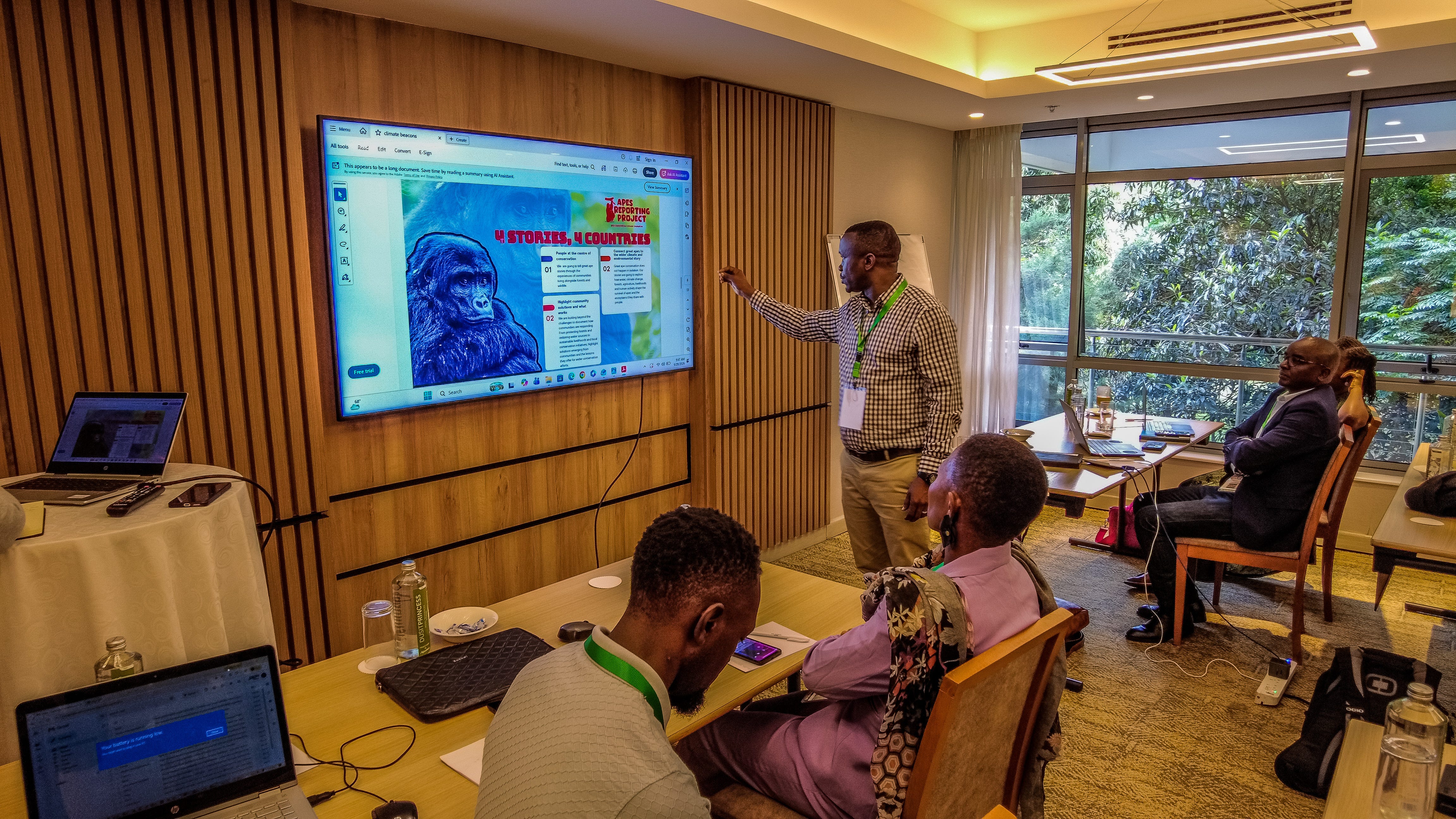
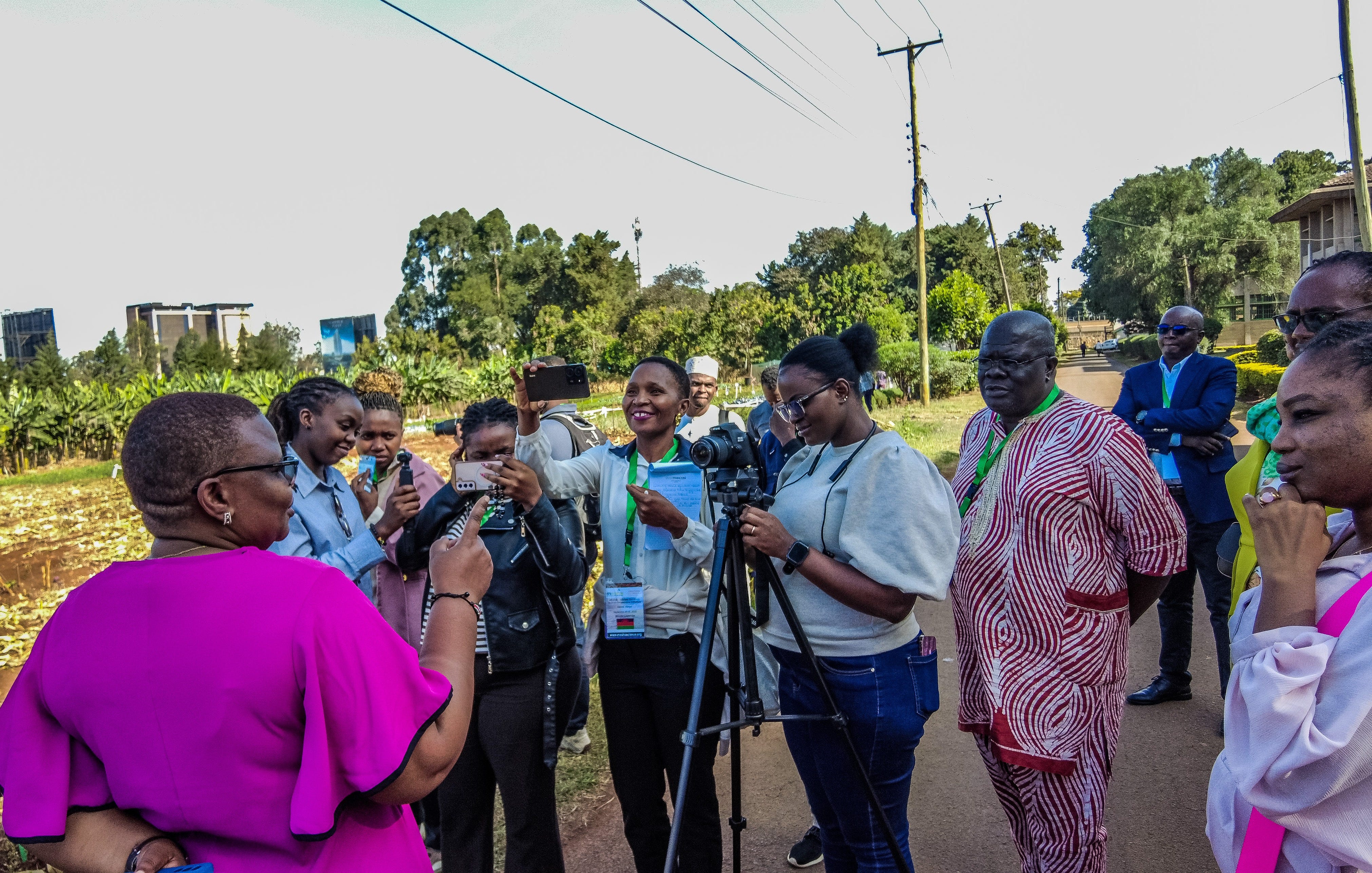
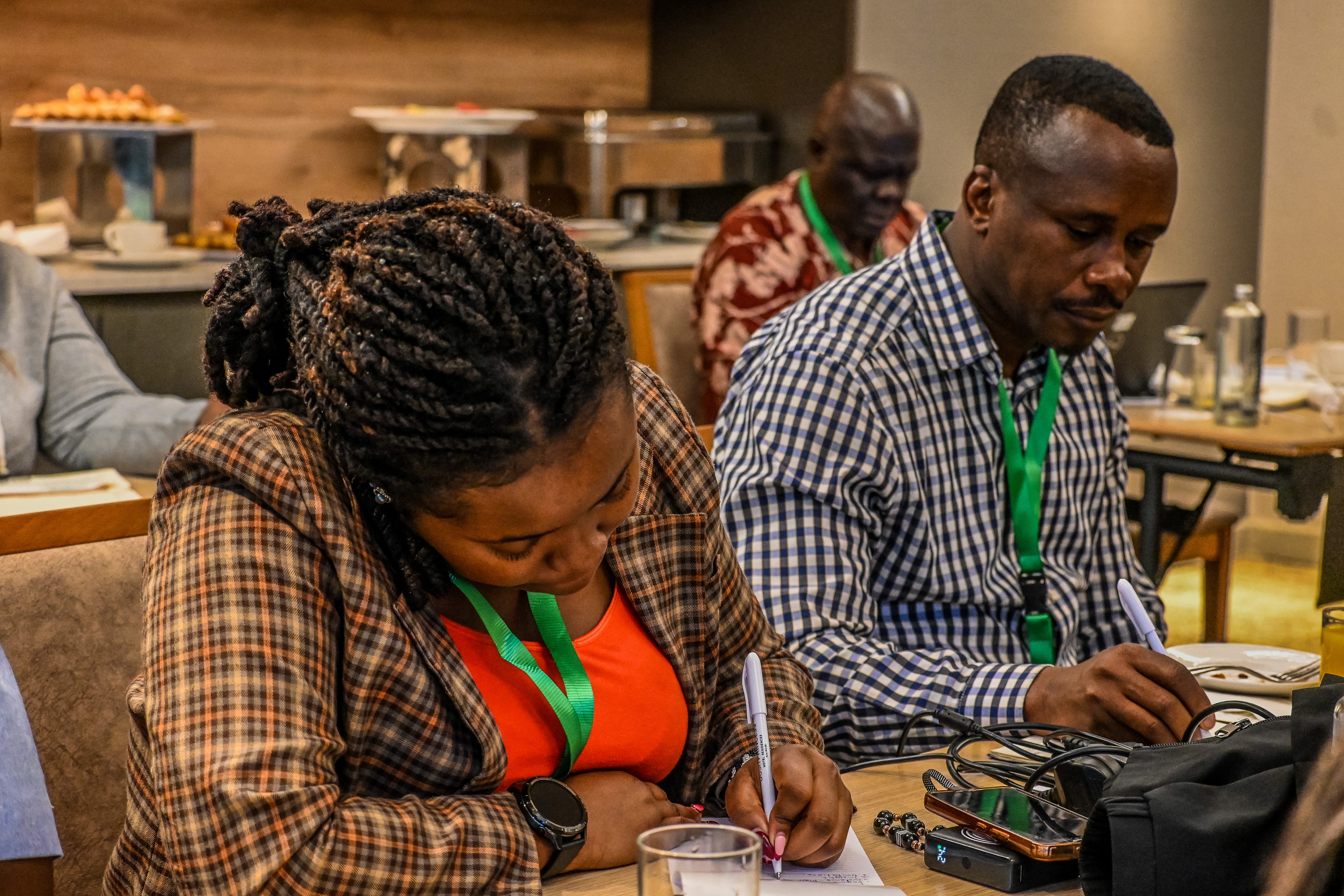
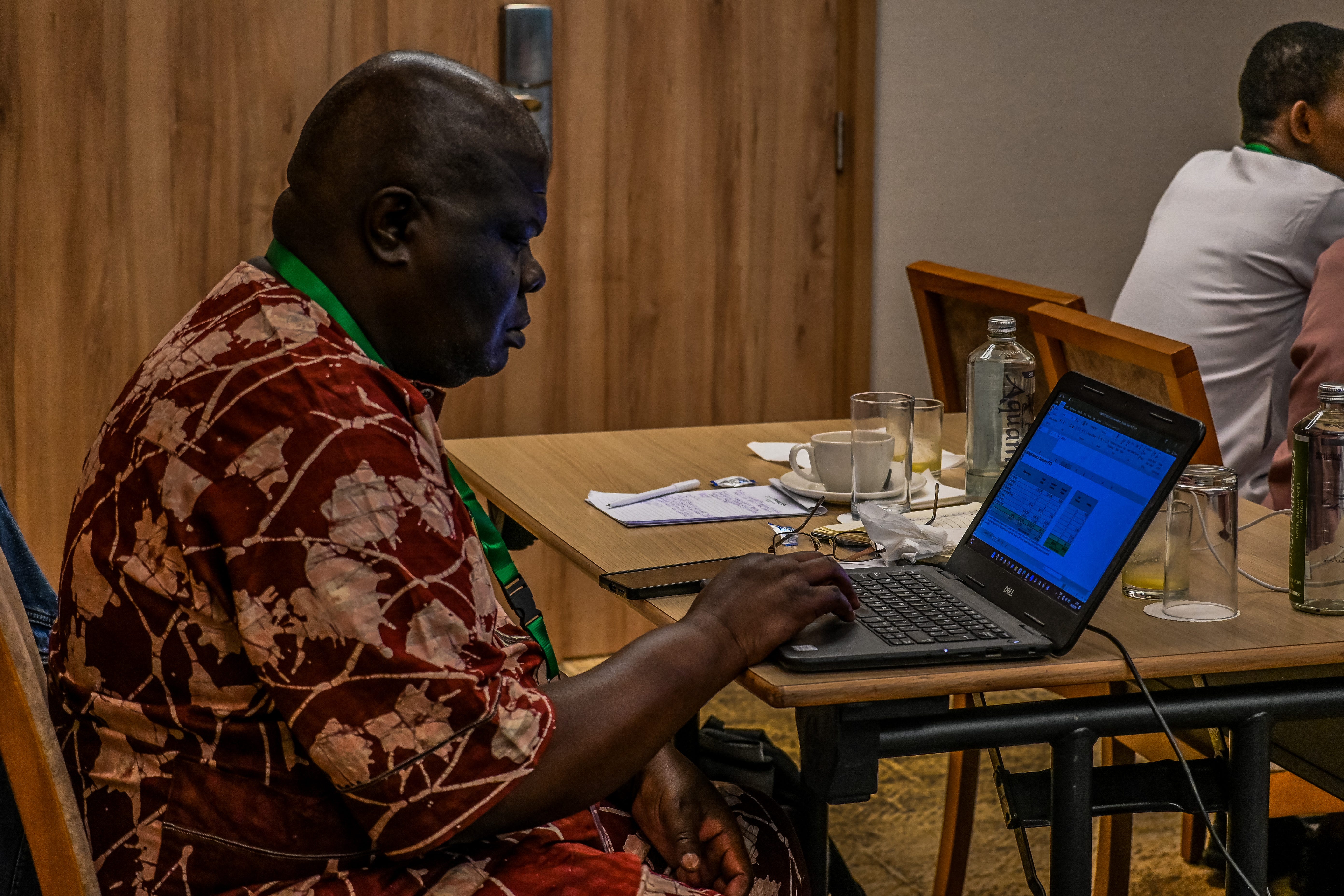
The MESHA/Solutions Journalism Network Africa Climate Beacons Initiative Inaugural Meeting in Nairobi
Water Journalists Africa and its project, Apes Reporting Project, were proud to have joined six other newsrooms across Africa, from Uganda, Kenya, Nigeria, Malawi and Tanzania, at this inaugural meeting in Nairobi to set the course for a seven-month-long fellowship empowering newsrooms to do more solutions-based journalism when it comes to climate and science reporting.
“Bad stories sell and good stories whisper,” was a good question posed by Hellen Shikanda, SOJO credited trainer at the workshop.
Our media industry is facing pressures around money-generating agendas, with 80% being bad news. Solutions journalism takes time to produce, and with audiences conditioned to consume news at a rapid speed, there is just not enough time to produce solutions-based stories.
But then, if we do not heavily invest in solutions-based stories, then who will? Who will set this agenda in motion? Someone has to.
“We continue to let politicians set our agenda when it comes to storytelling. We need to be the ones to set the agenda,” said Aghan Daniel, Chief Executive Officer at MESHA during one of the sessions. He also stressed that we should not be like politicians and be too desperate for solutions that do not work, even going as far as mentioning that we should be a society that reexamines everything, including what scientists say.
Well, then, how does solutions journalism work? Seems rather complicated, don’t you think?
Solutions-based journalism gives a difference between hope and hype, to put it simply.
But also, as Caroline Karobia, a multimedia journalist and SJN Africa Initiative Manager, put it, solutions-based journalism is responses to widely shared problems, and these solutions have been mapped for a while. That is why there is evidence to be seen, disputed or corrected.
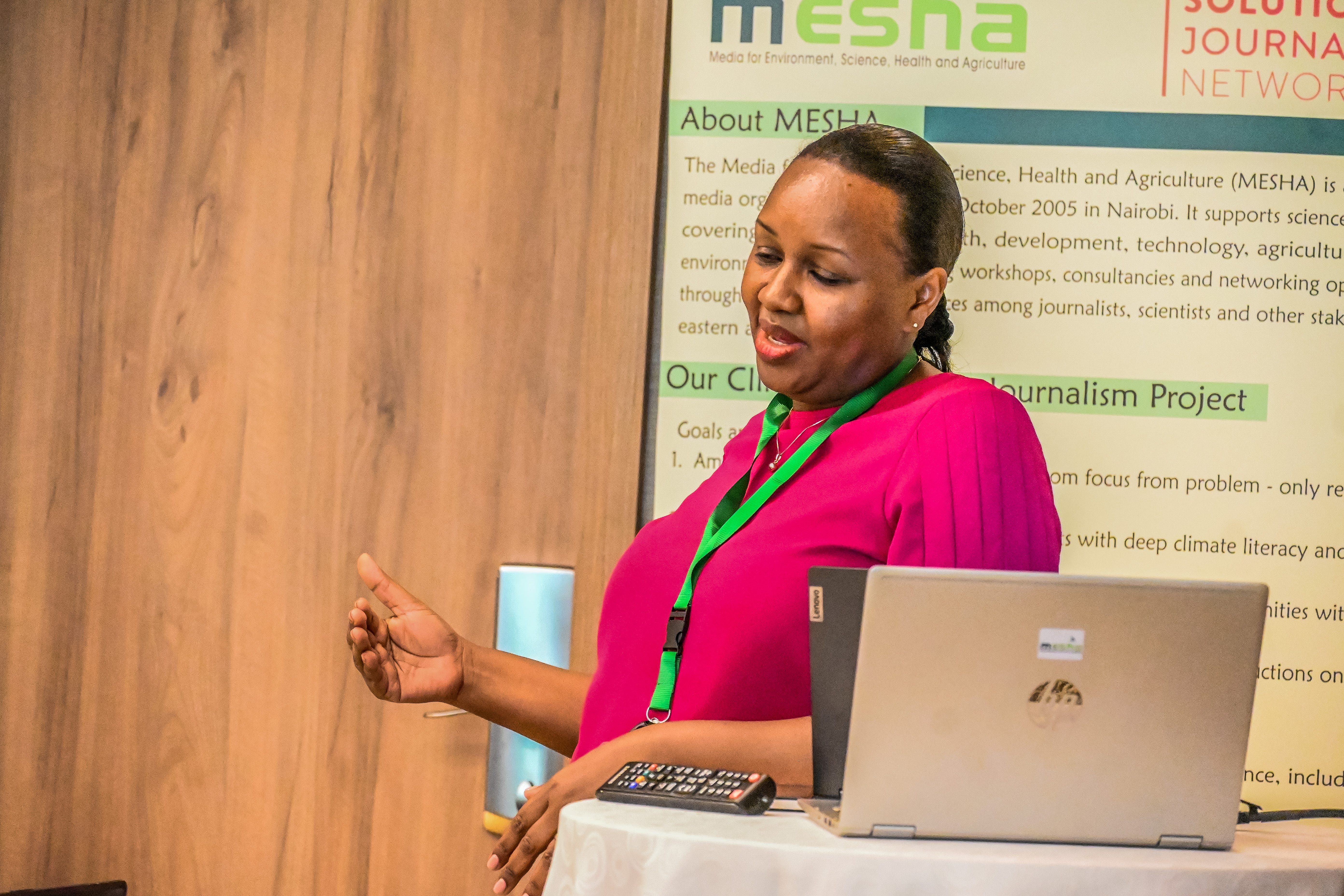
“Limitation is what makes a story journalism,” said Caroline. “What is working has been news for a while, and that is what editors have been working with for a while when brainstorming.”
She urged newsrooms to actively engage with the community and their audiences by listening to care. “Do not assume you know what people care about. Just ask them, what is more pressing? Assuming you can throw news at people without giving them context is not going to lead newsrooms anywhere.”
“Let us be realistic when looking for solutions. Do not promise heaven without having the four pillars of solutions journalism applied,” said Aghan Daniel, the CEO of MESHA.
Solution-based climate stories come into play
You do not know what you do not know. Rings a bell?
When it comes to climate change, early preparedness is key, according to Christine Maswi, Climate Scientist at the Kenya Meteorological Centre.
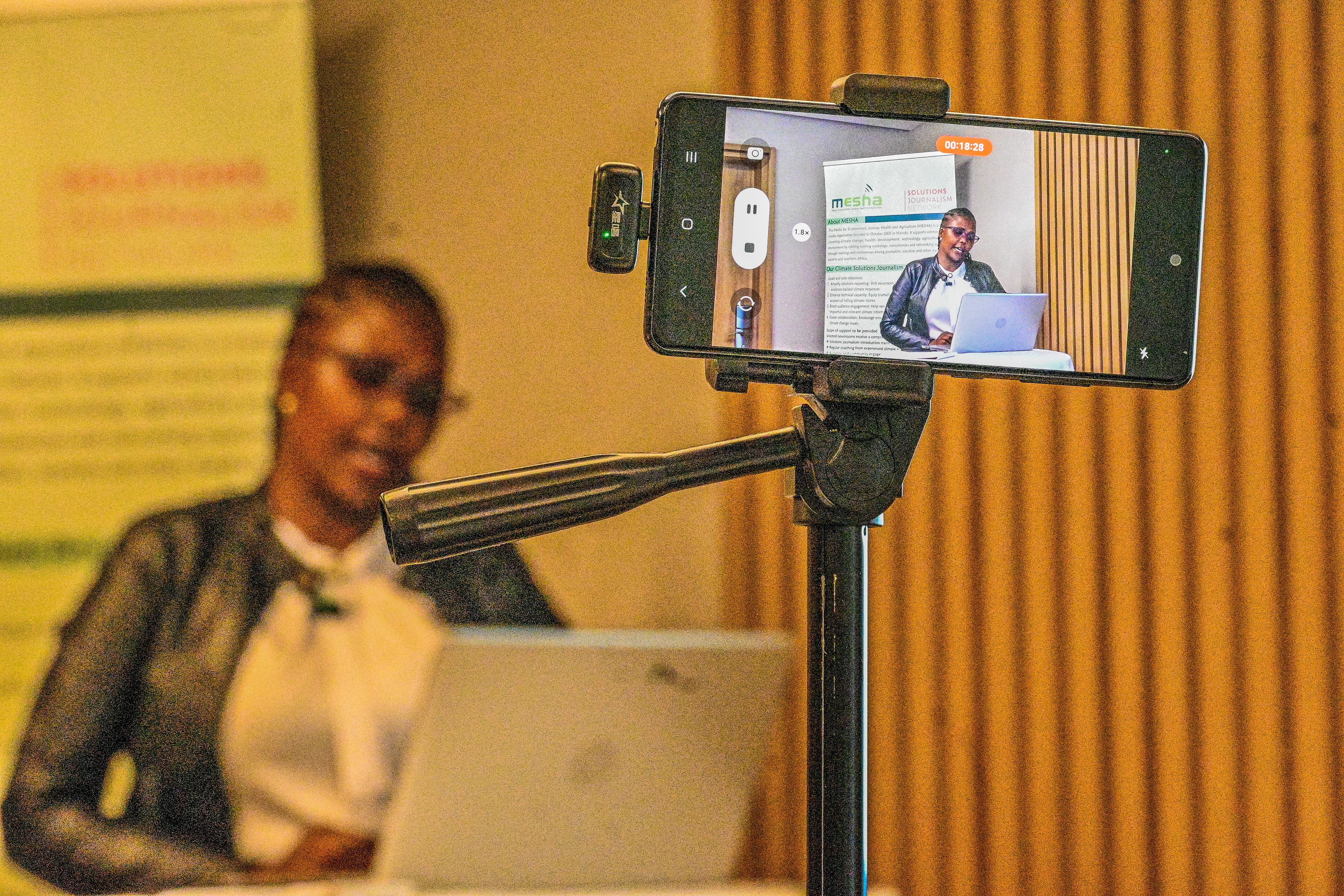
“Africa’s climate story is increasingly a story about risk management, resilience and choices. Climate is now an agricultural, health, water, infrastructure, economy, governance or public finance story,” says Christine.
She also stressed that the problem with disaster-first reporting is that the important questions are normally not raised. For instance: Why was the community vulnerable? Was there a warning? Did people receive and understand it? What should change before the next event?
A disaster is an event. Climate risk is a continuous story. And so, in her final words, she said she hopes that the warnings they normally issue reach the vulnerable on time, because they are the most impacted when this hits.
“The story continues after a technology is released. Climate reporting asks what happened to a farmer or pastoralist. Solutions reporting asks what could help, where it works, what it costs, and whether people can use it,” said Dr Floridah Maritim, Director of Corporate Communications at KALRO (Kenya Agricultural & Livestock Research Organization).
In his own words, our founder, Fredrick Mugira, advised that sometimes a paragraph is all that is missing to connect a biodiversity story to a climate story, and that is also how easy it is to miss it.
The newsroom transformation in Africa
This is not going to be done in a day. It is going to take time, and this initiative is quite a good place to start.
Water Journalists Africa carries with it a lot of learnings from this workshop, but one thing it is taking back to its masses is the need to transform its stories to vividly carry the four pillars of solutions journalism, and to remember that a response to a widely shared problem is solutions journalism.
We have already begun the first leg of training on solutions journalism, data journalism and climate reporting, and this is going to be regular. With repetition comes mastery.
But also, one thing newsrooms can remember, especially mainstream newsrooms, is to at least assimilate or designate a few solutions-oriented stories and put them on rotation so that most journalists can put these skills into practice.
Finally, let us remember this concept shared by Hellen Shikanda:
Solutions journalism is like hope with teeth.
(Understand to solve a problem.)